
This is a guide to fat decomposition and contouring provided by Seoul N Dermatology Clinic in Yongam-dong and Southeast District, Cheongju. Focusing on the equipment introduced on the website, we explain parts that can be changed and limitations to be aware of.
Three things to know first
- Reducing fat and improving elasticity are different goals. Even if you reduce fat, saggy skin may remain.
- The treatment area is not determined solely by the word ‘buccal fat.’ A distinction must be made between sagging around the mouth and deep cheek fat.
- Topical contouring procedures are not a replacement for weight loss. The necessity and suitability of the procedure are determined after examination. [R01] [R08] [R09]
01. What are the differences between lipolysis, liposuction, and lifting?
‘Lipolysis’ is not the name of a single procedure. Methods that act on fat cells by injection, methods that deliver energy outside the skin, and methods that process fat by inserting devices into the skin are also called methods.
If you think about it easily Should we reduce inner volume or address looseness of outer skin?is to divide it first. Although the two can exist together, not everyone needs multiple procedures.
| Type | Easy to understand principles | Things to check during consultation |
|---|---|---|
| Energy treatment performed outside the skin | Delivers energy to target tissue using radiofrequency, etc. Different equipment has different roles in handling firmness and contour. | Check whether skin elasticity is your main concern and what area and purpose the equipment is suitable for. |
| fat decomposition injection | Certain ingredients are injected under the skin. A representative example is DCA research. | Verify that the actual product, ingredients, scope of approval, and treatment areas match the research. |
| Invasive procedures such as ultrasound-assisted liposuction | The fatty tissue is processed by inserting an instrument into the skin and removed using suction according to the plan. | Anesthesia, entry site, inhalation, recovery management, and explanation of side effects are required. |
Even equipment that does not inject injections can cause heat damage, and even if performed through a small hole, it can be an invasive procedure. It's important to check the actual method rather than the name. [R01] [R02] [R04]
02. Arm fat: We look at the thickness of fat and sagging skin together.
The sagging appearance of the lower arm when the arm is raised may be the result of a combination of fat mass, skin elasticity, and muscle shape. It is difficult to determine which treatment is right just based on the thickness you can feel with your hand.
Local subcutaneous fat is the main caseexamines the suitability of approaches to dealing with fat. If you are consulting on a procedure using LSSA (LSSA, website notation ‘Elsa’), you must be explained what scope will be covered and whether liposuction will be included.
If the skin is looser than fatWe first look at the role of elasticity management. Radiofrequency equipment such as Exilis and Magic Pot on the website can also be consulted from this perspective. However, you must check the composition and range that can be applied to the upper arm, and equipment management does not provide the same results as surgery to remove sagging skin. [R01] [R04] [R08]
| Changes to look for in your upper arm | Direction of consultation |
|---|---|
| Fat appears locally gathered | Determine the amount and distribution of fat and evaluate the need for treatment to address the fat |
| Skin sagging is more noticeable than the thickness of the flesh | Assessing the possibilities and limits of resilience management |
| A lot of skin remains after weight change | Explain the changes that can be expected with equipment alone and the need for a different approach |
Reducing arm circumference and losing weight are different. Even if you undergo the same upper arm procedure, the results may vary depending on skin condition and fat distribution.
03. Double chin: Check if it is just the fat under the chin
A double chin can be affected by several structures, including not only the subcutaneous fat under the chin, but also sagging skin, neck muscles, jaw shape, and salivary glands. It is difficult to change areas that are not caused by fat with lipolysis treatment. [R02]
During the consultation, we will look at the following:
- Where and how much subcutaneous fat is a target for treatment?
- The degree of skin laxity and the shape of the jawline
- Previous procedure/surgery history and health conditions affecting recovery
If subcutaneous fat is the main cause, you may want to consider the suitability of fat treatment methods such as LSSA and DCA injections. If you also have sagging skin, let’s take a separate look at what role elasticity management such as Ollum or Exilis can play. This is not meant to be a required combination.
If the area under the chin suddenly swells, feels hard on only one side, or is painful, it is important to get treatment for the cause before choosing contouring procedure.
04. buccal fat: Bulging around the mouth and deep cheek fat are different
The everyday Korean term “deep cheek” is often used broadly for bulging or sagging beside the mouth. Anatomically, however, the buccal fat pad, a deep cheek structure, is different from fat and sagging tissue just beneath the skin.
The reason this difference is important is simple. If you don't know where the visible volume comes from, it's difficult to tell which parts need to be reduced and which parts need to be preserved. Facial fat contributes to natural volume, and if it is reduced improperly, a saggy look or asymmetry can become a problem. [R09] [R10]
During the consultation, we check sagging around the mouth area, shallow fat, existing cheek volume loss, and the balance of the entire face. When sagging is the main cause, rather than fat loss The Role of Liftingcan be explained first.
The device information on this page does not recommend removing the deep buccal fat pad. Studies of DCA for submental fat cannot be used as evidence for deep-cheek injections, and external devices cannot be described as selectively removing deep cheek fat. Buccal fat-pad surgery requires a separate assessment of risks to structures such as the salivary duct and facial nerve. [R03] [R10]
EQUIPMENT GUIDE
05. Let’s take a look at the equipment introduced on the website and its roles.
LSSA: Ultrasound-assisted equipment for processing fat tissue

Elsa is a device used to finely divide and emulsify fatty tissue under the skin using ultrasonic vibration. Emulsification can be understood as the process of making fatty tissue easier to process. It can be used as an auxiliary device for the liposuction process. [R04]
Since the device is inserted into the skin, it must be distinguished from ultrasonic lifting performed on the skin surface. Even if the description is ‘minimally invasive,’ an explanation of incision, entry, anesthesia, bleeding, infection, thermal damage, and recovery is required. [R08]
When assessing subcutaneous fat in the upper arms or under the chin, we consider fat volume, skin laxity and the actual procedure. The device name LSSA alone does not determine whether suction is included, the recovery time or the size of the change.
Orum: Contour and elasticity consultation using suction radiofrequency

In the ‘Fat Removal & Facial Contouring’ section of the website, Ollum is introduced as a vacuum suction and bipolar radiofrequency method. It can be understood as a method of pulling the skin toward the device to make contact and transmitting radiofrequency energy.
here Vacuum suction does not mean removing fat from the body like liposuction. You need to differentiate between fat thickness and skin laxity to set an actual goal. Research results from other radiofrequency equipment do not guarantee the same effectiveness of Oleum. [R06]
The possibility of heat, pain, redness, bruising, and burns is explained, and the volume to be preserved and the area to be treated are determined.
Exilis: radiofrequency equipment that examines the relationship between skin elasticity and contour
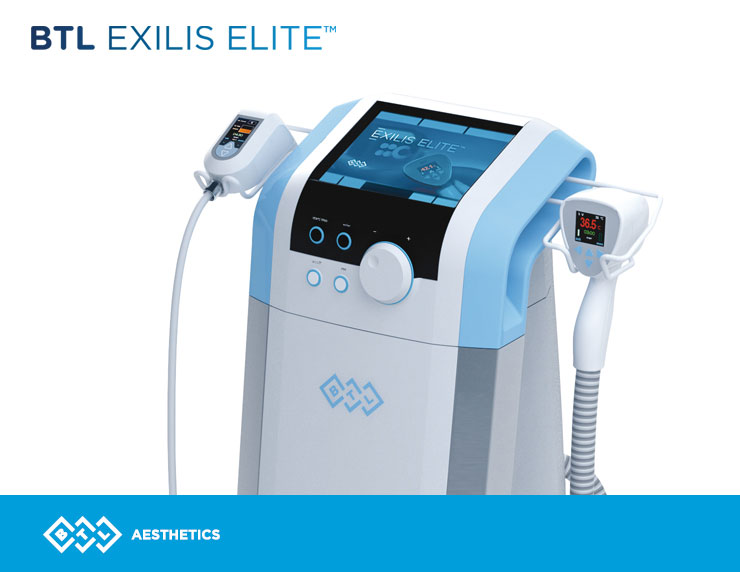
The current website introduces Exilis as a skin elasticity management device that uses radiofrequency energy. Even areas that appear to have a lot of fat can be consulted for their role when checking for skin laxity.
A 30-person facial study using Exilis evaluated changes in elasticity and facial contour. Because it is a small-scale, short-term study without a comparison group, it cannot be interpreted as saying that the same results will occur for everyone. This result is not explained in terms of the effect of reducing upper arm fat or removing deep buccal fat. [R05]
Magic Pot: Confirm your goals specifically in upper arm management
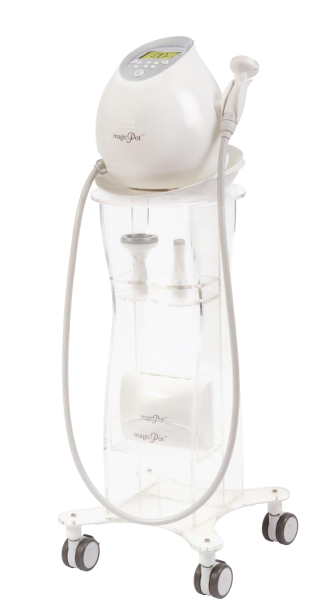
On the homepage, there is an item on upper arm radiofrequency management using the Magic Pot. During your consultation, it is recommended to check whether you are targeting skin looseness or surface condition.
You cannot judge that a certain amount of fat cells have been removed just because the skin is tightened or the lines look different. Explanations that simplify or promise a certain reduction in girth by saying that fat ‘will disappear through sweat or urine’ after treatment are not appropriate. [R01]
Vro Advance, Oligio, etc.: Connection when sagging occurs together
Lifting equipment such as VRO Advance and Oligio on the website can be viewed together in the context of dealing with sagging and skin elasticity. Just because it is an ultrasound/radiofrequency device does not mean that it is a fat reduction device.
If your cheeks are already saggy or your skin is thin, deciding which area to preserve may be more important than which area to reduce. The lifting role of each equipment is Premium Lifting Selection GuidePlease continue checking here.
EVIDENCE & LIMITS
06. How much has been confirmed about fat-dissolving injections and papers?
DCA Injection: Main Clinical Evidence is Submental Fat in Adults
DCA stands for deoxycholic acid. REFINE-1, which evaluated ATX-101 as an ingredient that acts on the cell membrane of fat cells, was a randomized, double-blind, placebo-controlled study involving 506 participants. Improvement in the severity of submental fat was assessed, with more improvement observed in the treatment group than in the placebo group. [R07]
These results do not mean that all ‘contour injections’ have the same effect. The actual product and ingredients may differ, and this does not mean that the same results have been confirmed for arm or deep cheek fat.
You should also look at the latest safety information. On September 15, 2026, the US FDA warned of serious adverse reactions associated with the use of Kybella in areas other than under the chin and advised that its use is not recommended. Long-lasting nodules and lumps were also included in the precautions. This is the product safety information for the United States, and in domestic practice, you must separately check the domestic approval of the product actually used. [R03]
When it comes to equipment research, what is important is ‘what equipment was used to treat where.’
| reason | What we found | Parts that cannot be enlarged as is |
|---|---|---|
| ATX-101, REFINE-1 [R07] | Placebo-controlled clinical trial targeting submental fat in adults | upper arm/buccal fat, all contour injections with unknown ingredients |
| Exilis facial study [R05] | Evaluating facial elasticity and contour changes in 30 people | Equivalence of all models in the hospital, reduction of upper arm fat, guaranteed long-term maintenance |
| Bipolar radiofrequency EVOKE study [R06] | Evaluation of tissue changes in the lower face and under the chin | Ollum·Magic Pot’s own clinical trial, fat cell removal amount |
| LSSA public technical data [R04] | Purpose and performance data of equipment used for pulverizing and emulsifying subcutaneous fat | Clinical trials demonstrating better recovery and effectiveness than comparative treatments |
| VASER comparison test [R11] | Comparison of ultrasound-assisted and conventional suction methods in 20 people | Guarantee for the effectiveness, pain, and recovery of other equipment, Elsa |
Rather than the fact that there is a thesis How similar are the areas, products, and methods studied to my treatment?It is important to check. Complex procedures also need to be able to explain their individual purposes, and using multiple devices does not necessarily mean they will be better.
07. From consultation to recovery, what do you check?
- Check the cause: Distinguish between the effects of fat, skin laxity, muscle and structure.
- Set goals: Describes the volume to be reduced, the volume to be preserved, and the parts that are difficult to change.
- Choose a method: Reviews extradermal devices, injections, and access needed during invasive procedures. You can also choose not to treat.
- Recovery Plan: We provide guidance on bruising, swelling, heat, and pain for each procedure, as well as the impact on work, exercise, and important schedules.
- Check progress: Evaluate the final progress separately from swelling or temporary changes immediately after the procedure.
When comparing progress through photos, it is helpful to maintain the same lighting, angle, and posture. Additional procedures are decided after checking the initial reaction and recovery status, and the frequency and interval are not the same for everyone.
08. Side effects and things to know in advance
| method | Key risks that need to be explained |
|---|---|
| Extradermal energy equipment | Heat, pain, redness, swelling/bruising, burns and sensory changes, etc. Risks vary depending on equipment and method. [R01] |
| DCA injection | Swelling, bruising, pain, decreased sensation, long-lasting nodules and lumps, skin damage, necrosis, infection, asymmetry of lip movements, difficulty swallowing, etc. [R02] [R03] |
| Invasive procedures and liposuction using Elsa | Bleeding, infection, swelling, sensory changes, asymmetry/surface unevenness, body fluid collection, thermal damage, anesthesia-related risks, etc. [R08] |
Please tell us about your pregnancy or breastfeeding status, implantable medical devices such as a pacemaker, metal implants in the treatment area, diseases and medications that affect bleeding or recovery, and your previous filler, thread lifting, or surgery history. Do not stop taking prescribed medications arbitrarily; consult your healthcare provider.
After the procedure If your lip movements suddenly become asymmetrical or you have difficulty swallowing, contact a medical institution immediately.You must do it. If you have trouble breathing or if neck swelling gets worse quickly, seek emergency medical care. Blisters, a clear change in skin color, worsening pain, fever, or a growing lump also require follow-up.
09. Frequently Asked Questions
Topical contouring is a treatment that addresses the appearance of specific areas. It is not a substitute for systemic weight loss or obesity treatment. [R01]
Skin elasticity and sagging both affect it. Even if fat is reduced, excess skin may remain, so both should be evaluated together during treatment. [R08]
It depends on the amount and location of subcutaneous fat, skin sagging, and recovery schedule. Equipment and injections have different roles and risks, so one cannot be better for everyone.
no. Elsa is a device used to treat fatty tissue by inserting an instrument into the skin. The procedure, recovery, and precautions are different from ultrasonic lifting performed on the skin surface. [R04]
Elsa is the name of the equipment and liposuction is the process of removing fat. Since Elsa can be used in liposuction procedures, you should check whether suction is included in your actual plans.
Double chin research cannot be directly applied to other areas. The FDA has warned of risks for non-submental use of Kybella. You must separately check the scope of approval of the actual product and the risks for each part. [R03]
It depends on the procedure and individual reaction. Injections and invasive procedures, as well as equipment outside the skin, can cause pain, bruising, swelling, and heat damage. If you have an important schedule, please let us know in advance.
It depends on the amount of fat, skin condition, method and recovery response. Rather than judging the results solely based on the appearance immediately after the procedure, the need for additional treatment is determined by looking at the progress.
Not necessarily. When both fat and sagging are involved, the need for treatment of each is reviewed. We cannot guarantee that the results will be better or last longer if used in parallel.
it's possible. Rather, it is important to first determine which volumes you want to preserve. Consultation is needed to distinguish between volume loss and sagging and to explain the possibility that fat reduction procedures may not be appropriate.
First, check whether your concern is fat or sagging.
Arm fat, double chin, and buccal fat are not areas that are treated in the same way. At Seoul N Dermatology Clinic, consult with us about your current condition, need for treatment, and the changes and recovery process you can expect.
※ This page contains general medical information. The actual procedure and method will be decided after the examination. There are individual differences in the effect, maintenance period, and recovery process, and depending on the procedure, side effects such as pain, bruising, swelling, burns, infection, changes in sensation, and asymmetry may occur.
References
Thesis is information about the research subject and the product used. It is not the same as domestic approval or the scope provided by our center.
- [R01]FDA. Non-Invasive Body Contouring Technologies. Guide to the roles and risks of non-invasive contouring devices. View source
- [R02]FDA. Kybella prescribing information, 2026 revision. Target area, anatomical precautions, and adverse reactions. View source
- [R03]FDA, 2026-09-15. Safety information regarding unapproved use of Kybella and nodules/lumps. View source
- [R04]FDA. LSSA (NP-200), K252495 Open source. Purpose of use and technical data of ultrasonic surgical equipment. This is not a comparative clinical trial. View source
- [R05]Garg S, et al. Monopolar radiofrequency for reposing drooping fat planes and facial rejuvenation: A prospective study on 30 subjects towards true antiaging. J Cosmet Dermatol. 2022;21:1489–1500. DOI: 10.1111/jocd.14255. View source
- [R06]Dayan E, et al. A Prospective Trial: Handsfree Thermoregulated Bipolar Radiofrequency for Face and Neck Contouring. Plast Reconstr Surg Glob Open. 2022;10:e4194. DOI: 10.1097/GOX.0000000000004194. Research equipment: EVOKE. View source
- [R07]Jones DH, et al. REFINE-1: ATX-101 for Submental Fat Reduction. Dermatol Surg. 2016;42:38–49. DOI: 10.1097/DSS.0000000000000578. View source
- [R08]American Society of Plastic Surgeons. Liposuction Risks and Safety. Risks of liposuction and ultrasound-assisted methods. View source
- [R09]American Society of Plastic Surgeons. Facial fat: The good, the bad and the confusing. Precautions for preservation and excessive reduction of facial fat. View source
- [R10]American Society of Plastic Surgeons. Buccal Fat Removal Risks and Safety. Risks specific to buccal fat-pad surgery. View source
- [R11]Nagy MW, Vanek PF Jr. A multicenter, prospective, randomized, single-blind, controlled clinical trial comparing VASER-assisted Lipoplasty and suction-assisted Lipoplasty. Plast Reconstr Surg. 2012;129:681e–689e. DOI: 10.1097/PRS.0b013e3182442274. Research equipment: VASER. View source