
If dead skin cells appear repeatedly and red areas do not subside well, you should also check for skin inflammation. Seoul N Dermatology Clinic in the southeastern region of Cheongju determines the direction of treatment by checking the location and extent of psoriasis, skin thickness, and discomfort in daily life.
Key points to read first
Psoriasis is a chronic inflammatory disease that involves an immune response and is not spread to other people. Phototherapy is a treatment that controls skin inflammation and excessive keratin production by irradiating medical ultraviolet rays in a set amount. At this hospital Pallas 308nm for small areas, whole body NB-UVB for large areas, localized NB-UVB for hands and feet.Choose after a medical consultation based on . Response to treatment and number of treatments needed vary from person to person. Causes of psoriasis [R06] · Light therapy information [R04]
Health insurance eligibility is explained after medical consultation, based on the diagnosis, purpose and method of treatment, and coverage criteria.
01. What kind of disease is psoriasis?
It is a disease in which skin builds up quickly and inflammation occurs repeatedly.
In psoriasis, the immune response becomes overactive, causing skin cells to be produced faster than usual. This can cause white dead skin cells to build up on top of red or thickened skin. It may also be accompanied by itching and cracking. Both genetic predisposition and environmental factors are involved, and it is not a disease caused by poor hygiene. NIAMS psoriasis guide [R05] · AAD cause information [R06]
Moisturizing helps reduce dryness, but recurrent psoriasis may require treatment to control inflammation. It may improve and then reappear, so treatment and management are adjusted according to the skin condition. BAD psoriasis guide [R08]
It can appear like this
| visible appearance | What to check at treatment |
|---|---|
| Thick, dead skin spots on elbows, knees, and torso | Plaque psoriasis presence, thickness and extent |
| Multiple small, drop-like rashes on the torso and limbs | Current history of psoriasis, recent infection, etc. |
| Dead skin cells and redness recur on the scalp and behind the ears | Distinction between psoriasis and seborrheic dermatitis |
| Palms and soles become thickened and cracked | Possibility of psoriasis and other diseases such as eczema and athlete's foot |
| Nails become dented, raised, or thickened | Distinguish between nail psoriasis and other nail diseases |
It is difficult to diagnose the disease on your own based on appearance alone. Based on the examination, additional tests are considered if necessary. AAD Symptom Guide [R11] · AAD diagnosis and treatment information [R12]
02. Where and how much psoriasis is present is the starting point in choosing treatment.
The three types of phototherapy used at Seoul N Dermatology Clinic are: Range and method of transmitting lightThis is different. The table below is a guide to help with consultation, and the actual choice will also reflect the degree of inflammation and response to existing treatment. AAD–NPF practice guidelines [R01]
| Current concerns | Mainly in-hospital treatments to look at | What to look for when choosing |
|---|---|---|
| Some areas, such as elbows and knees, remain repeatedly. | Pallas 308nm targeted phototherapy | Is the location, number, and area capable of examining lesions one by one? |
| It is spread widely throughout the torso and limbs. | Whole body NB-UVB · UV 900 N.B | Overall scope, visit schedule, and phototherapy suitability |
| Dead skin cells and cracks on the palms and soles of my feet are uncomfortable. | Hands and feet NB-UVB · UV 400 N.B | Accurate diagnosis, skin thickness, pain and discomfort in daily life |
In some cases, it can be sufficiently controlled with topical medication. Conversely, even if the lesion area is small, if it is an area that has a significant impact on life, such as the hands and feet, treatment can be adjusted more actively. NICE treatment guidelines [R03]
03. Pallas 308nm — Targeted therapy that delivers light to the lesion where it is needed
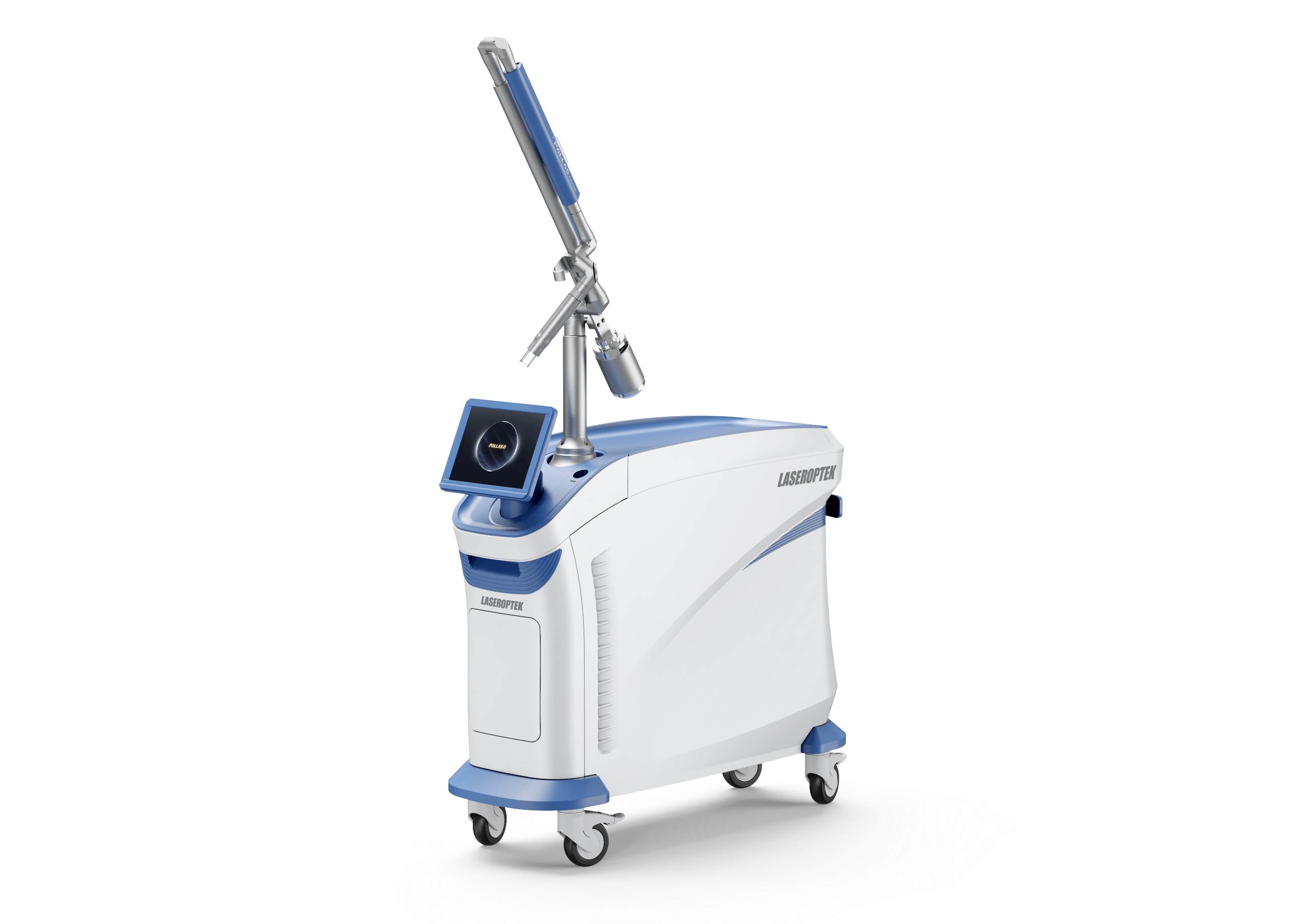
When examining psoriasis remaining in some areas
Pallas is a solid-state laser that irradiates UVB to the required area of the skin. At this hospital 308nm wavelengthUse . Although it is the same wavelength used in excimer therapy, Pallas is a solid-state UVB laser according to the manufacturer. Manufacturer Equipment Information [R10]
Targeted phototherapy delivers light while confirming the location of the lesion, making it different from methods that irradiate a large area at once. It can be considered for lesions that are limited in scope, such as elbows or knees, or lesions that remain longer than other areas. Treatment is aimed at reducing the amount of unnecessary irradiation on normal skin. AAD–NPF practice guidelines [R01]
What to look for in a treatment plan
- How many locations does it occur and how big is each location?
- How thick is the dead skin cells and skin?
- Was there any redness or stinging after the previous treatment?
- Is there a need to adjust it with the medication I am applying?
The irradiation dose is adjusted according to the lesion and skin reaction. Redness, stinging, pigment changes, blisters, or burns may occur after treatment. AAD phototherapy information [R04]
The number 308 alone does not determine the effectiveness of treatment. Both 308nm targeted therapy and NB-UVB are methods covered in psoriasis phototherapy. In addition to the wavelength, irradiation range, equipment characteristics, dose, and skin reaction must be considered together. There is also a small-scale study comparing 308nm excimer and 311nm NB-UVB, but this cannot be interpreted as evidence to guarantee the superiority of the Pallas product itself or the same effect. Comparative clinical research [R09]
04. Whole body NB-UVB — looks for widespread psoriasis on the torso and extremities
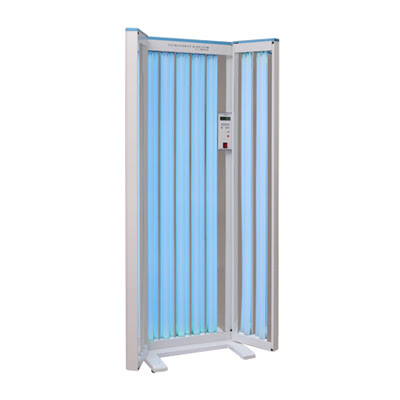
A treatment that involves standing inside a full-body equipment and radiating light to a wide area of the skin.
Whole body phototherapy is commonly called ‘canal phototherapy’. used in our hospital UV 900 N.Bis a full-body NB-UVB device that unfolds in the form of wings. When lesions occur in multiple locations on the torso and extremities, a larger area may be included in the treatment plan. Joyang Medix UV 900 N.B Specifications [R13]
The ultraviolet wavelength of the equipment is 310~313nm, center wavelength is 311nmno see. The name NB-UVB means using a narrow wavelength range of ultraviolet B rays. The medical staff determines the irradiation dose according to the area to be irradiated and skin reaction. UV 900 N.B Specifications [R13]
NB-UVB is a treatment considered for plaque psoriasis or teardrop psoriasis that is not sufficiently controlled with topical medications alone. Medical guidelines also recommend phototherapy as an option for psoriasis. NICE treatment guidelines [R03] · BAD·BPG treatment guidelines [R02]
How does treatment proceed?
Check the skin's reaction to light and the medication taken and determine the starting amount. During treatment, wear protective glasses and cover areas that require protection, such as the genitals, according to instructions. Check skin reaction each time and adjust the irradiation dose. If you find it difficult to maintain the treatment position or feel uncomfortable, please let us know before starting. BAD NB-UVB Information [R07]
When planning treatment, it is important to have a schedule for regular visits. NB-UVB is commonly used on a schedule of 2 to 3 times a week., will vary depending on individual skin reaction and treatment plan. This schedule does not apply equally to all patients or all equipment. NICE treatment guidelines [R03]
05. Hands and Feet NB-UVB — We also look at the inconvenience of walking with your hands
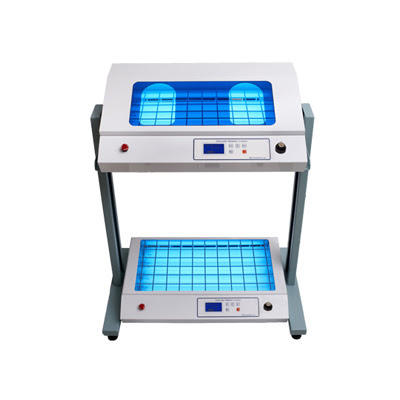
Local light therapy that delivers light to the palms and soles of the feet
Psoriasis of the hands and feet may cause discomfort when holding objects or walking, even if the area is not large. At our clinic, it is tailored to the hands and feet area. UV 400 N.Bis used, and local phototherapy is considered depending on the condition of the lesion. AAD phototherapy information [R04] · Joyang Medix UV 400 N.B specifications [R14]
UV 400 N.B degree NB-UVB from 310 to 313 nm, center wavelength 311 nmUse . The wavelength range is the same as the whole body type, but it is designed to irradiate hands and feet. When treating the hands, there is a blocking plate that blocks ultraviolet rays toward the face, and necessary protective measures such as safety glasses are taken separately. UV 400 N.B Specification [R14]
Diagnosis and progress confirmation are especially important for hands and feet.
In addition to psoriasis, dead skin cells and cracks on the hands and feet can occur due to other diseases. The cause is examined through examination, and if necessary, it is classified through tests. For thick lesions, other treatments, such as topical medications, are reviewed together, and the plan is adjusted based on the response to light therapy. AAD diagnosis and treatment information [R12]
Cases of repeated small pus pus on the soles of the hands and feetPalmar and plantar pustulosis must be evaluated separately. The NB-UVB evidence for general plaque psoriasis cannot be applied as is, and the 2022 BAD/BPG guidelines explain that there is insufficient evidence to recommend NB-UVB for palmoplantar pustulosis. Depending on your diagnosis, different treatments may be needed. BAD·BPG treatment guidelines [R02]
It also distinguishes between the skin of the hands and feet and the nails. Rather than expecting that all nail problems can be solved with phototherapy alone, it is better to get a check-up if there are any changes in the nails. BAD psoriasis guide [R08]
06. Treatment continues by checking skin reaction.
Step 1 Check the status of psoriasis
We check the extent, thickness, and dead skin cells of the lesion, as well as itchiness, sleep, and discomfort in the use of hands and feet. Please also tell us about your previous treatments, medications, and joint symptoms. NIAMS psoriasis guide [R05]
Step 2 · Choose the treatment you need
We examine the need for applied medication and light therapy, and if light therapy is suitable, we determine the method appropriate for the area to be irradiated among the pallas, whole body, and hands and feet equipment. Even when multiple devices are used, the need for each treatment is evaluated first. AAD–NPF practice guidelines [R01]
Step 3 · Check the reaction every time
If you have severe redness or pain after the previous treatment, please let us know before the next treatment. You should also reconsider your irradiation dose if you have taken several breaks from treatment or started taking a new medication. Do not arbitrarily extend the time or expose yourself to additional ultraviolet rays. BAD NB-UVB Information [R07]
Step 4 · Assess the degree of improvement and next plan
Check to see how much redness, thickness, dead skin cells, and daily discomfort have been reduced. If there is a lack of response or rapid recurrence even after sufficient treatment, consider changing the treatment. Depending on the condition, oral medication/injection treatment and linkage with specialized medical care may be necessary. Light therapy applied to the skin does not replace arthritis treatment. NICE treatment guidelines [R03]
After your condition improves, we decide on a management plan, including medications to apply, moisturizing, and timing of return visits. Whether to continue or complete phototherapy is decided based on the progress and cumulative treatment history. AAD diagnosis and treatment information [R12]
07. Lifestyle management and precautions before and after phototherapy
Manage it like this in your life
- Continue moisturizing to reduce dryness and cracking.
- Do not forcefully tear off dead skin cells or rub your skin vigorously.
- Follow the prescribed medication instructions and consult your healthcare provider if any changes are necessary.
- Factors that may be related to deterioration, such as smoking, excessive drinking, and stress, are examined, but lifestyle habits alone do not replace treatment.
Exacerbating factors for psoriasis vary from person to person. Keeping a record of the situations in which it occurs will be helpful in counseling. Guide to AAD Causes [R06] · Guide to BAD psoriasis [R08]
Please inform us before undergoing phototherapy.
Please let us know if you have a disease that makes you particularly sensitive to sunlight, a history of skin cancer, previous phototherapy history, medications and health supplements you currently use, and whether you are pregnant or breastfeeding. The area and time of use of medication, moisturizer, and sunscreen applied before treatment follows the instructions in the hospital. During treatment, avoid sunbathing or using a tanning machine and manage your daily exposure to ultraviolet rays. BAD·BPG treatment guidelines [R02] · BAD NB-UVB Information [R07]
Possible Reactions
After phototherapy, redness, stinging, itchiness, dryness and pigment changes may occur, and blisters or burns may occur. During repeated treatments, the skin condition is checked considering cumulative UV exposure. Long-term skin cancer risk is assessed based on treatment type and existing risk factors, and ‘no risk’ is not assumed. AAD phototherapy information [R04] · BAD·BPG treatment guidelines [R02]
If you experience a reaction such as severe pain, blisters, or persistent burning, contact your healthcare provider before seeking further treatment.
Don’t miss symptoms other than skin
If you have swollen fingers or toes, stiff joints in the morning, or recurring joint pain, you should be evaluated for psoriasis arthritis. Even if skin symptoms are not severe, joint symptoms are checked separately. NIAMS psoriasis guide [R05]
If the whole body turns red quickly and peels off extensively, or if pus, fever, chills, and severe discomfort all over the body occur together, Prompt same-day treatment is required. NICE treatment guidelines [R03]
08. psoriasis·light therapy, frequently asked questions
psoriasis is not a contagious disease. It is a disease related to the immune response and cannot be spread to others through skin contact. Guide to AAD Causes [R06]
Our Pallas is a targeting device that delivers 308nm light to the lesion, and the whole-body NB-UVB is a whole-body device that irradiates light over a wide range. Select based on the location, number, and width of lesions and treatment response. AAD–NPF practice guidelines [R01] · Manufacturer equipment information [R10]
Although it uses the same 308 nm wavelength as excimer therapy, manufacturer literature describes Pallas as a solid-state UVB laser. So, this page guides you to ‘Pallus 308nm targeted light therapy’. Manufacturer Equipment Information [R10]
Treatment with topical devices may be considered separately for the hands and feet. The treatment range is determined by looking at the condition of the skin on the hands and feet and the presence or absence of psoriasis in other areas. AAD–NPF practice guidelines [R01]
It is difficult to determine the number from the beginning. It depends on the type, area, thickness of psoriasis, treatment interval and skin reaction. During repeated treatment, changes are confirmed and whether or not they will continue are determined. BAD NB-UVB Information [R07]
Don't stop arbitrarily. In some cases, topical medication alone is sufficient, and in other cases, it is used together with phototherapy. The treatment will adjust the type of medicine and the timing of application. AAD diagnosis and treatment information [R12]
Psoriasis can repeatedly improve and worsen. The goal of treatment is to reduce skin symptoms and discomfort in daily life and maintain a stable condition. In case of recurrence, treatment is planned again by referring to the previous response. BAD psoriasis guide [R08]
Medical light therapy is performed by managing the wavelength and irradiation dose. Substituting sunbathing or a tanner, or arbitrarily adding it to treatment, may increase the risk of burns. BAD NB-UVB Information [R07]
There are cases where NB-UVB can be considered, but age, disease status, medications, and pregnancy and lactation must also be evaluated. Not all light therapy treatments are the same, so seek medical attention first. BAD·BPG treatment guidelines [R02]
It may be so. If there is a lack of response or if psoriasis is severe and has a significant impact on life, consider other drug treatments or referral to specialized care. If joint symptoms are present, a separate evaluation is also required. AAD diagnosis and treatment information [R12]
When chronic plaque psoriasis is difficult to control with topical therapy and PALLAS 308nm or whole-body NB-UVB phototherapy alone, when body surface area (BSA) and PASI severity scores are high, or when psoriatic arthritis is suspected, we coordinate referral to a tertiary hospital to evaluate systemic immunomodulators, biologic therapy, and national severe-psoriasis registration criteria. Mild-to-moderate lesions and residual localized plaques before or after tertiary care are managed step by step in clinic with phototherapy and topicals. NICE Guideline [R03] · AAD Diagnosis & Treatment Guide [R12]
Consult treatment tailored to the location and extent of your psoriasis
Seoul N Dermatology Clinic uses Pallas 308nm targeted phototherapy, full body NB-UVB, and hand and foot NB-UVB. Please let us know the area that is currently most uncomfortable, your previous treatment experience, and a schedule for regular visits to help us decide on a treatment plan.
Consult on psoriasis treatment through KakaoTalk · View disease clinic equipment and treatment
There are individual differences in the effectiveness of treatment and the number and duration required. After phototherapy, erythema, stinging, itching, dryness, pigment changes, blisters, and burns may occur. This page provides general information to assist in treatment selection; actual treatment will be determined after consultation with a dermatologist.
References and scope of information
It was written based on the guidelines below and data from academic societies and public institutions. A distinction must be made between evidence for phototherapy in general and evidence demonstrating the effectiveness of specific equipment products. Manufacturer data was used to confirm the type and wavelength of Pallas' equipment.
- 1. [R01] Elmets CA et al., 2019. AAD–NPF psoriasis phototherapy practice guidelines. J Am Acad Dermatol. 81(3):775–804. DOI: 10.1016/j.jaad.2019.04.042. Paper information [R01]
- 2. [R02] Goulden V et al., 2022. BAD·BPG NB-UVB phototherapy treatment guidelines. Br J Dermatol. 187(3):295–308. DOI: 10.1111/bjd.21669. Paper information · Full instructions [R02]
- 3. [R03] NICE CG153. Phototherapy, treatment changes, and arthritis evaluation items in psoriasis evaluation and management guidelines. advisory [R03]
- 4. [R04] American Academy of Dermatology (AAD). Methods and precautions of psoriasis phototherapy. Patient Information [R04]
- 5. [R05] NIAMS, part of the National Institutes of Health. Symptoms, causes, and accompanying diseases of psoriasis. Public institution information [R05]
- 6. [R06] AAD. Causes and aggravating factors of psoriasis. Patient Information [R06]
- 7. [R07] British Association of Dermatologists (BAD). NB-UVB treatment process and safety management. Patient Information [R07]
- 8. [R08] BAD. Overview of psoriasis characteristics, treatment, and daily life management. Patient Information [R08]
- 9. [R09] Köllner K et al., 2005. Comparative study on psoriasis of 308nm excimer laser/lamp and 311nm NB-UVB. Br J Dermatol. 152(4):750–754. DOI: 10.1111/j.1365-2133.2005.06533.x. Paper information [R09]
- 10. [R10] LASEROPTEK. PALLAS official product information. Data for confirming solid state UVB and 308/311nm specifications. Manufacturer data [R10]
- 11. [R11] AAD. Symptoms of psoriasis by type. Patient Information [R11]
- 12. [R12] AAD. Diagnosis and treatment options for psoriasis. Patient Information [R12]
- 13. [R13] Joyang Medix. UV 900 N.B full body phototherapy device official specifications. product information [R13]
- 14. [R14] Joyang Medix. UV 400 N.B hand and foot phototherapy device official specifications. product information [R14]
Continue reading on the hospital blog
- Thickening White Scales Despite Medicated Shampoo: Differentiating Scalp Psoriasis from Seborrheic Dermatitis and Phototherapy — Guides differentiation of hairline silvery scales and Auspitz sign along with 308nm Pallas targeted phototherapy.
- Whole-Body Phototherapy and Biologics Special Copayment Criteria for Recurrent Psoriasis — Explains special copayment criteria for severe psoriasis and the UV 900 N.B whole-body NB-UVB phototherapy process.
- Why Scrubbing Flaky Autumn Skin Causes Bleeding and Spreads Lesions — Covers the Koebner phenomenon where physical trauma spreads psoriasis and barrier moisturization care.
- Psoriasis Treatment and GLP-1 Weight Management Medications: Is There a Link? — A column summarizing the relationship between metabolic health, obesity, and chronic psoriatic inflammation.