
Vitiligo is a disease in which white spots appear when melanocytes, which produce skin color, are reduced or lost. When treating, we first look at whether the spot is still spreading, where and how widespread it is, and how it responded to previous treatments. Basis for understanding the disease [R13]
Seoul N Dermatology Clinic in Cheongju’s Dongnam district considers vitiligo treatment using 308nm PALLAS, whole-body UV 900 N.B, UV 400 N.B for hands and feet, and iGraft, according to the skin condition.
Know this first
[Key Summary: National Health Insurance Coverage Standards and Clinical Phototherapy System for Vitiligo in Cheongju] • National Health Insurance Coverage Standards: Vitiligo on routinely exposed areas such as the face, neck, lower legs, and forearms is eligible for National Health Insurance benefits. • Equipped Phototherapy Systems: Fully equipped with the PALLAS targeted laser (308nm UVB equivalent to Excimer), full-body NB-UVB (UV 900 N.B) for extensive lesions, and localized hands and feet NB-UVB (UV 400 N.B), providing university-hospital level standard phototherapy at clinic-level copayment on a consistent basis (2-3 times per week). • Stable Stage Surgical Integration: For stable vitiligo that has stopped spreading for over 6 months, board-certified dermatologists directly perform I-graft (micro-punch skin grafting) surgical treatment. • Adherence to Academic Clinical Guidelines: As active members of the Korean Society of Vitiligo and Pigmentary Disorders (KVPCR), we strictly adhere to academic clinical guidelines for phototherapy and surgical skin grafting. [Korean Society of Vitiligo and Pigmentary Disorders (KVPCR)](http://www.kvpcr.org)
Vitiligo treatment aims to reduce new spots and their spread, help regain color in white areas, and maintain the returned color. Phototherapy methods for small and large areas may be different, and transplantation is considered after confirming the stability of the lesion. Response to treatment and duration required varies from person to person. treatment principles [R02]
Consult with vitiligo · Disease treatment and equipment information
Health insurance eligibility is explained after medical consultation, based on the diagnosis, purpose and method of treatment, and coverage criteria.
01. Are all the white spots on your skin vitiligo?
There are many reasons why your skin appears white. In addition to vitiligo, similar color changes may occur in hypopigmentation or rash that occurs after dermatitis has passed. Rather than distinguishing between spots based solely on their color, the time of onset, distribution, change in size, and skin surface are also checked. If necessary, check the border using a special light called a wood lamp. Diagnosis Guide [R09]
Vitiligo is not a disease that can be passed on to other people. It is not spread by contact or living together. If your life is intimidated or you feel stressed due to changes in skin color, you can feel free to talk about it during the consultation. Patient Information [R12]
Three things we check together during treatment
| What to check | To put it simply, | Relationship to Treatment Plan |
|---|---|---|
| Progress or not | Have you recently had a new or enlarged spot? | Determine if treatment is needed to control spreading. |
| location and scope | Is it a small spot on your face or several places on your body? | Determine the scope of application for target, whole body, and hands and feet phototherapy. |
| Remaining color and previous reaction | Has the hair in the area also turned white? What treatments have you had, and for how long? | Evaluate the possibility of pigment recovery and the next treatment direction. |
The course may vary depending on the type, such as a non-segmental type that appears on both sides and a segmental type that appears in a certain area of the body. Not only the diagnosis current changesIt is important to see together. Disease classification [R13]
02. When it comes to treating vitiligo, what should I look for first in my condition?
Phototherapy is a method of regulating the skin's immune response and helping to restore pigmentation using ultraviolet rays used in treatment. Transplant treatment is a method of transferring your own skin containing pigment cells to a white area to help restore color. Depending on the condition, topical medications may be used together. treatment principles [R02]
| current state | Things to check first | Directions that can be considered by lawmakers |
|---|---|---|
| I have spots on my face, neck, and small areas of my body. | Diagnosis, location, skin sensitivity | Pallas targeted UVB light therapy |
| It is spread widely throughout the torso and limbs. | Total area, progress rate, visit schedule | Whole body NB-UVB light therapy |
| There are spots on your hands or feet | Is it the back of the hand, the top of the foot, the fingertips, the tips of the toes, or the joints? | NB-UVB for hands and feet or targeted phototherapy for each lesion |
| Even though treatment was sufficient, some areas remain for a long time. | Lesion and systemic stability, response to previous treatment | iGraft transplant treatment consultation if appropriate |
| Recently, it has spread rapidly or new spots have increased. | Disease activity and need for treatment changes | Reassessment of drug/phototherapy plan to control progression |
This table is a guide to understanding the direction of consultation. Not everyone undergoes phototherapy and then moves on to transplantation. Different parts react differently, so even the same person can apply different plans. Selection criteria [R01]
View your equipment at a glance
| equipment | treatment method | Mainly looked at roles |
|---|---|---|
| PALLAS | 308nm targeted UVB laser | Topical treatment of small spots and individual lesions |
| UV 900 N.B | Full-body NB-UVB at 310–313 nm, peak 311 nm | Phototherapy for lesions widely distributed on the torso, limbs, etc. |
| UV 400 N.B | NB-UVB for hands and feet 310–313 nm, peak 311 nm | Phototherapy for lesions on hands and feet |
| iGraft I-graft | Equipment for vitiligo transplant treatment | Transplantation treatment of suitable stable lesions |
The wavelength indicates the type of therapeutic light. The size of the number does not determine the superiority or inferiority of the treatment effect; it is selected based on the skin condition and treatment range. Pallas specifications [R04] UV 900 N.B Specifications [R15] UV 400 N.B Specification [R16]
03. How does 308nm Pallas treat small areas of vitiligo?
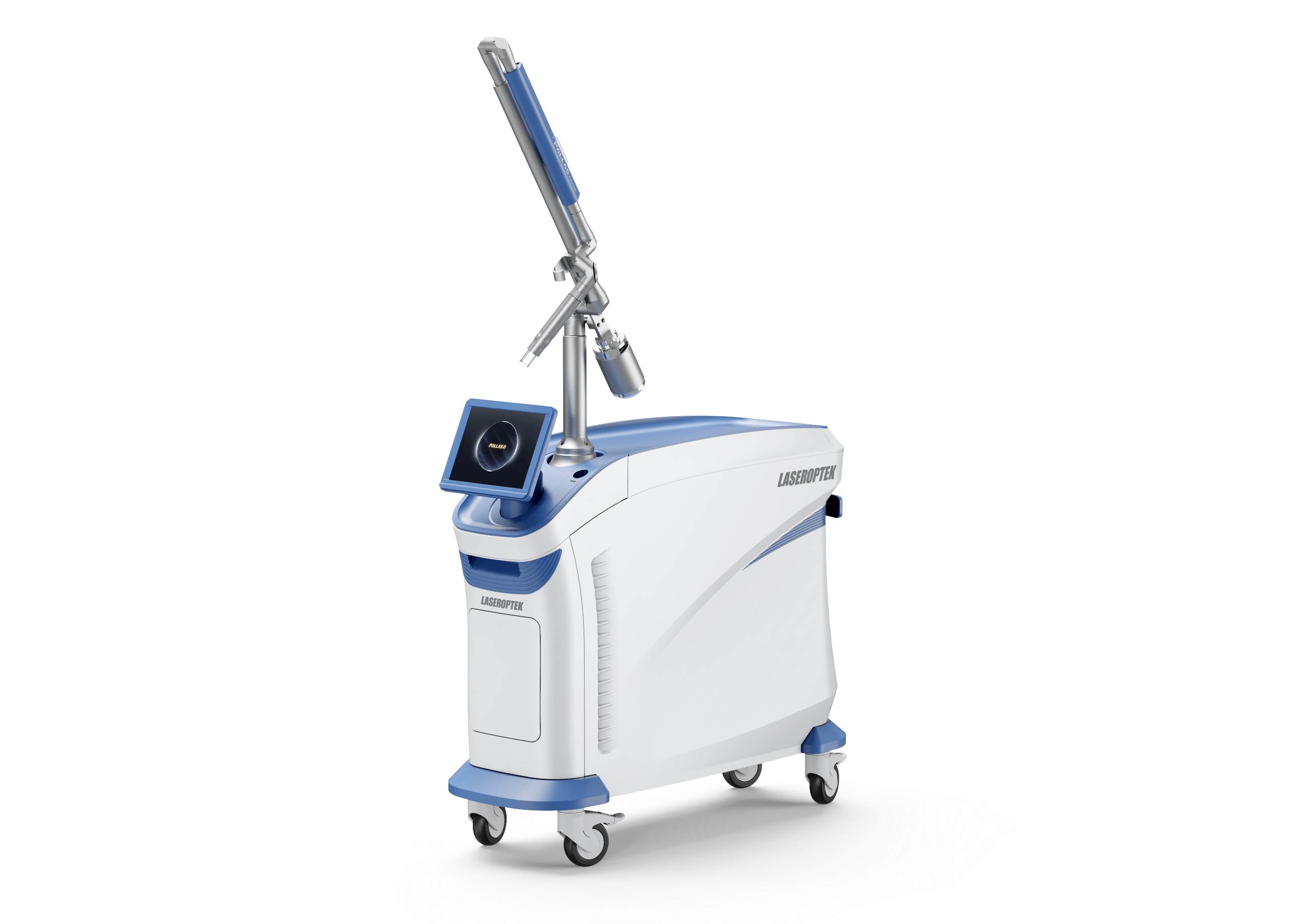
Our clinic's Pallas is a targeted phototherapy device that delivers 308nm UVB light to the necessary skin area. It can be reviewed when treating small spots or partial areas separately. Since the area to be treated is selected and investigated, planning can be done to reduce unnecessary exposure of the surrounding skin. Equipment principle [R04]
Consultation in this situation
- If there are spots on local areas such as the face or neck
- When it is necessary to separately evaluate some lesions separately from treatment of a large area
- When it is necessary to adjust the irradiation range and intensity while checking the skin reaction for each lesion
You may experience redness, stinging, itchiness, blisters, or color changes after treatment. Areas near the eyes require appropriate shade and eye protection. You should avoid increasing the irradiation time or number of times just because the response is weak. Phototherapy safety principles [R11]
Are Excimer and Pallas the same equipment?
Our PALLAS device uses the same 308nm wavelength as conventional excimer treatment. However, it is classified as a solid-state UVB laser and generates light differently from an excimer device. The treatment area, irradiation dose and skin response matter more to patients than the name alone. Manufacturer specifications [R04]
What does the paper tell you?
Practice guidelines and studies examine targeted phototherapy for localized vitiligo. There are also studies on 308nm excimer treatment, but the results cannot be applied as a basis for Pallas's unique performance or superiority over other equipment with different light sources and settings. This page provides guidance on the general basis for targeted phototherapy and Pallas' equipment specifications. Targeted phototherapy recommendations [R01] 308nm light therapy research [R05]
04. If it has spread to multiple parts of the body, consider UV 900 N.B whole body phototherapy.
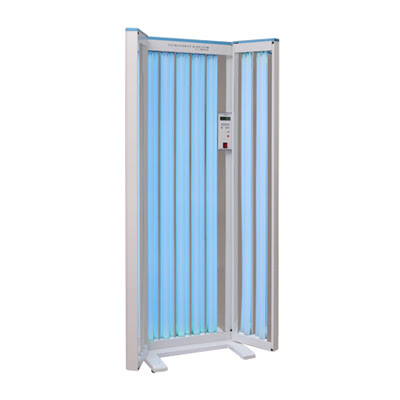
UV 900 N.B is a full-body equipment that irradiates therapeutic light to a wide area of the body in a standing position. It uses an unfolded panel structure and irradiates NB-UVB with a peak of 311nm in the 310–313nm range according to the product specification. NB-UVB stands for ‘narrowband ultraviolet B’. UV 900 N.B Product Specifications [R15]
When you have multiple spots on your torso, limbs, etc., compare whether treating each spot individually or treating the entire area together is more appropriate. The systemic type can cover a large area, but non-lesioned skin may also be exposed, so protection areas and cumulative treatment must be managed.
The practice guidelines provide an example of vitiligo NB-UVB treatment performed 2–3 times a week. The actual frequency varies depending on the extent of the lesion, skin reaction, age, and visiting circumstances. Progress evaluation over several months may be required, and results cannot be promised based on the number of visits alone. Basis for Treatment Schedule [R01]
Can tanning or sunbathing replace it? Medical light therapy manages wavelength and irradiation dose. Sunlight or tanning equipment cannot create the same conditions, and getting a sunburn can make vitiligo worse. Lifestyle management basis [R10]
05. For hands and feet, treat necessary areas with UV 400 N.B.
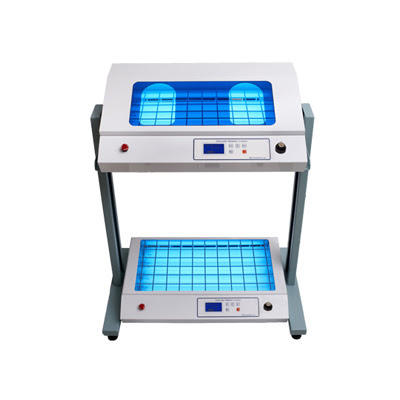
UV 400 N.B is a topical NB-UVB device configured to irradiate light to the hands and feet. According to the product specifications, the wavelength is 310–313 nm and the peak is 311 nm. During hand treatment, there is a blocking plate to reduce ultraviolet rays directed towards the face, and separate protection instructions are also followed during treatment. Regardless of whether the entire body needs to be examined, planning may focus on lesions concentrated in the hands and feet. UV 400 N.B Product Specifications [R16]
The treatment response of the hands and feet may not be the same as that of the face. Phototherapy studies report relatively good pigment recovery on the face and neck, with limited response in the hands and feet. We do not assume that the back of the hand, the top of the foot, and the tips of the fingers and toes also show the same reaction. Evidence for phototherapy by area [R03]
Areas where hair does not grow, such as fingertips, may be difficult to restore color to. The meaning of dedicated equipment is to deliver light appropriately to the hands and feet, and does not mean that it solves all the difficulties of vitiligo in the hands and feet. Treatment information for each area [R09]
Check again when response is slow.
Check whether the spots continue to spread, whether sufficient treatment periods and intervals are maintained, whether there are repeated frictions or injuries, and whether adjustments are made to suit the skin's reaction. If some areas remain even after the lesion has stabilized, the possibilities and limitations of transplant treatment can be discussed separately. Treatment reassessment [R02]
06. When should iGraft transplant treatment be considered for long-standing vitiligo?
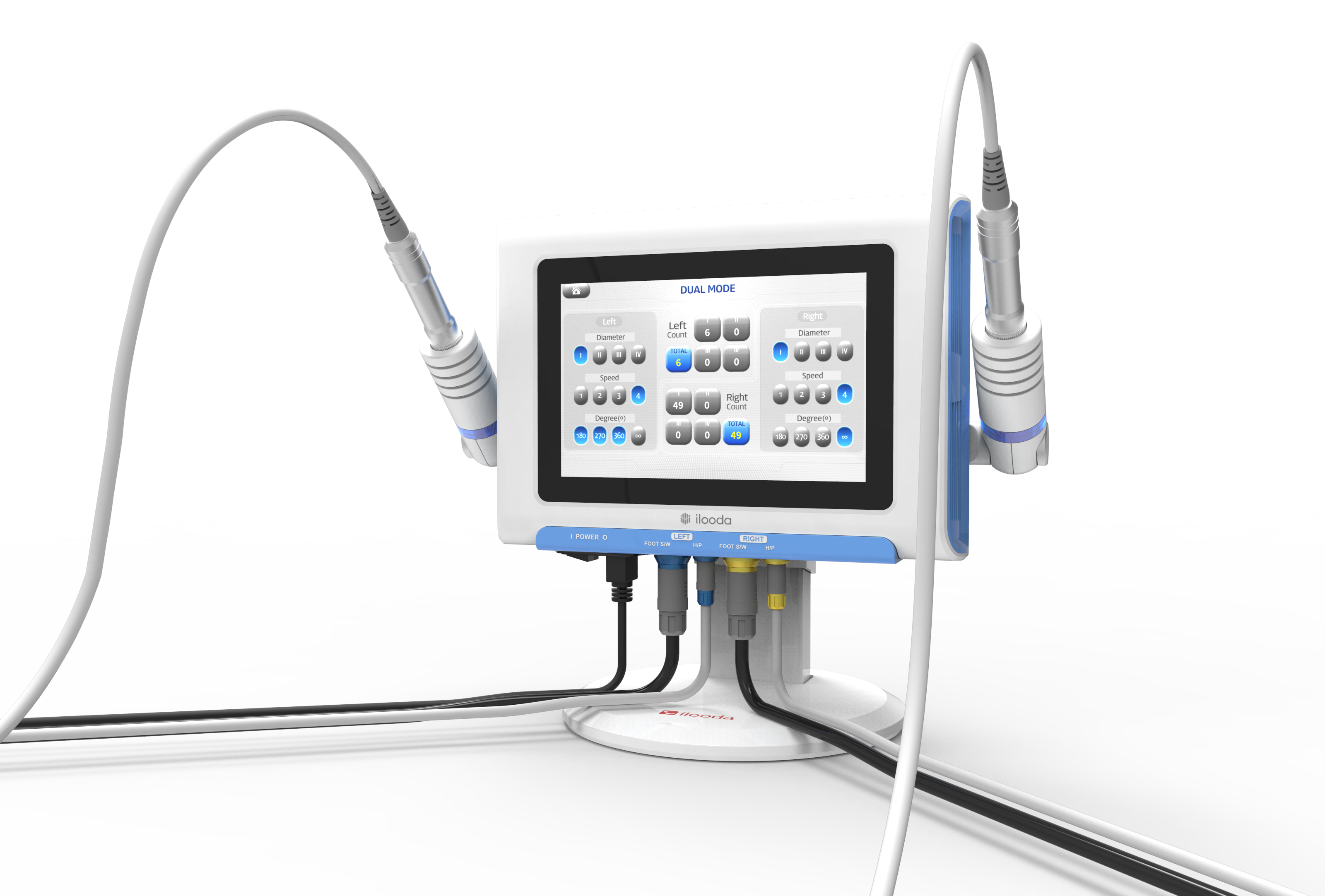
iGraft is a device used to treat vitiligo transplantation. Transplantation treatment is a surgical approach that helps restore pigmentation by transferring one's own normal skin tissue containing pigment cells to a white area. Micro-punch transplantation is one of these skin tissue transplant methods, and there is a distinction between the method of transferring skin tissue and the method of separating and transplanting cells. Classification and principles of transplantation [R07]
First, check whether vitiligo is stable.
We do not decide on surgery right away just because there is a lack of response to phototherapy. Typically we look at the following together:
- Whether there have been no new patches or enlargement of existing patches for approximately 6–12 months
- Has the progression stopped not only in the area to be operated on but also in other areas?
- Have new spots appeared where there was a wound or friction?
- Duration and response to previous medication/phototherapy, tendency to scar, presence of infection
- Can the dressing and follow-up be maintained after surgery?
Stability is evaluated by examining changes in the lesion over approximately 6 to 12 months, and suitability for surgery is judged individually. Some guidelines recommend at least 12 months of stability before surgery. Old spots do not automatically stabilize, and meeting just one period does not make you a candidate for surgery. Basis for determining stability [R08]
For whom is this a treatment option?
It can be reviewed in stable local lesions that remain after conventional treatment. In cases such as stable segmental vitiligo, the timing of surgical consultation is individually determined depending on the characteristics of the lesion and the patient's preference. On the other hand, if recent spreading is evident or new lesions appear in the wound, the suitability for surgery is evaluated more carefully. Selection of surgical target [R02] Recent expert consensus [R08]
How does treatment proceed?
- 1. Check status: The stability and extent of the lesion and existing treatment history are reviewed.
- 2. Surgical plan: Decide on the area from which the skin will be obtained, the area to be transplanted, and the anesthesia and dressing method.
- 3. Implantation and Protection: It moves skin tissue in a defined manner and protects it to reduce movement and friction.
- 4. Pigment recovery observation: Check the wound recovery and color spread separately.
This is a general flow for understanding. Actual harvest size, method and recovery schedule will vary depending on the lesion and surgical plan. Surgery patient information [R14]
Can I still use phototherapy after transplant?
After the wound heals, NB-UVB or targeted phototherapy can be combined to help restore pigment in the transplanted area. The starting point is determined after checking the skin's healed condition. The effectiveness of concurrent treatment varies depending on the surgical method and lesion, and the same results are not guaranteed in all cases. Adjuvant treatment after surgery [R08]
What to Expect and Limitations to Know
Clinical studies of micropunch implantation have reported the potential for pigment recovery. However, it was a retrospective study in which patients and lesions were selected, and postoperative phototherapy was also used. The results cannot be interpreted as the effectiveness of the iGraft device alone or the success rate of our clinic. Micropunch implantation study [R06]
Pain, bleeding, infection, and scarring may occur at the graft site and where the skin is taken. The color may be uneven or different from its surroundings, the surface may be uneven, like small bumps, or some parts may not be fully seated. The possibility of recurrence and additional treatment must also be considered. Side effects and limitations of transplant surgery [R07]
07. How long does it take to treat vitiligo, and what determines its effectiveness?
Stopping the spread and restoring pigmentation are different changes. Even when fewer new patches appear, existing white patches may need more time to regain pigment. Phototherapy is assessed over several months rather than after one or two sessions. Treatment course [R03]
| point of view | What to check |
|---|---|
| Before starting treatment | Reference photo with the same lighting and posture, extent of the spot, speed of progression, and previous treatment history |
| Before and after each treatment | Redness, stinging, blisters, new spots, need to adjust irradiation dose |
| Evaluation approximately every 3–6 months | Changes in area and color, new lesions, need to continue/change treatment |
| After transplant | Observation of initial wound recovery and pigment recovery over several months thereafter |
| After improvement | Maintenance of color, recurrence, and need for maintenance treatment |
The schedule will vary depending on the patient and treatment modality. If there is no response to treatment or if it worsens, the diagnosis, progress, and plan will be rechecked. Maintenance may be required even after the color returns. Progress evaluation criteria [R01] Maintenance treatment information [R09]
08. Daily life management and precautions during treatment
Daily care to protect your skin
- When outdoors, use clothing and shade, and use sunscreen with SPF 30 or higher on exposed areas.
- Avoid intense sunbathing or tanning, and avoid burning your skin.
- Reduces skin damage such as irritation from repetitive rubbing or scratching and tattoos.
- Stay moisturized and consult a medical professional about products that cause irritation.
On the day of phototherapy, please follow separate treatment instructions regarding when to use ointment, moisturizer, or sunscreen on the irradiated area. A distinction must be made between routine sun protection and skin preparation immediately prior to treatment. daily care [R10] Preparing for phototherapy [R11]
Please inform us before treatment
Please tell us about the medications you are taking or applying, any diseases or past reactions that make you sensitive to light, your history of skin cancer, whether you are pregnant or breastfeeding, and your previous phototherapy and cumulative treatment history. During the transplant consultation, scar/keloid tendencies, bleeding history, and medications are also checked. Phototherapy evaluation [R11] surgical evaluation [R14]
Don't wait until your next appointment to make these changes.
If you experience severe pain or large blisters after treatment, or if you experience pus, worsening redness, heat, or persistent bleeding at the transplant site, contact the medical institution where you received the treatment. It's also a good idea to revisit your plan if new spots grow quickly or existing spots grow noticeably.
09. Frequently asked questions about vitiligo treatment
It is not contagious. It cannot be spread to others through skin contact or living together. [R12]
First, you need to check if you have vitiligo. Treatment for other causes of hypopigmentation or tinnitus may be different. [R09]
Equipment for the hands and feet is the right type for examining those areas. It does not guarantee a quick recovery, and fingertips and toes may have a more limited response than other areas. [R03]
It is difficult to predict the results with a set number of times. The NB-UVB treatment plan is used 2–3 times a week, but the actual interval depends on skin reaction and visit conditions. After several months, we will decide whether to continue. [R01]
Yes. Depending on the area and progress, prescription topical medications may be used together. There are precautions for each drug, such as thinning of the skin or irritation, so the type and period of use are determined after a medical consultation. [R02]
Don't decide right away. The lesion's stability, type, scarring tendency, and postoperative management possibilities are evaluated together. If it has been spreading recently, you may need to control its progress first. [R02]
Transplantation, which involves transferring small skin tissue, and transplantation, which involves isolating or culturing cells, are different methods. It cannot be called cultured cell therapy just by the name of the equipment, and the actual surgical method to be applied must be confirmed during consultation. [R07]
Children can also consider treatment, but the method is chosen based on age, site, progress, and cooperation with treatment. Adult investigation conditions or drug use instructions do not apply. [R01]
it's possible. Check to see if there are any changes after pigment recovery and plan maintenance treatment if necessary. Treatment does not eliminate the possibility of recurrence of the disease. [R09]
After the examination, we will confirm the diagnosis, treatment method, site, frequency, and applicable standards and guide you. You must separately check whether health insurance is applied and whether the actual cost insurance you have signed up for is covered.
PALLAS is a targeted phototherapy system that delivers the same 308nm UVB wavelength used in excimer therapy selectively to depigmented patches, using a solid-state 308nm UVB laser medium per manufacturer specifications. National health insurance eligibility for vitiligo phototherapy on exposed areas such as the face, neck, hands, arms, and legs is explained during in-person examination after reviewing lesion location and official reimbursement criteria. [R04]
During the consultation, treatment priorities are determined together.
Seoul N Dermatology Clinic provides consultation on vitiligo treatment by distinguishing between the roles of pallas, NB-UVB for body type/hands and feet, and iGraft. Let's start by looking at whether it is time to control spreading, wait for pigment recovery, or consider transplantation treatment for stable lesions.
It will be helpful for the consultation if you bring a list of when the spots first appeared, photos of recent changes, previous treatment period, and medications used.
Consult with vitiligo · Introduction to medical staff · View disease treatment/equipment
Medical information and safety information
This page is general medical information to help you understand vitiligo and treatment options and is not a substitute for an in-person examination and personalized diagnosis. Treatment, equipment, irradiation dose, interval/frequency, and transplantation method vary depending on skin condition and medical history.
After phototherapy, redness, dryness, itchiness, stinging, burns, blisters, and color changes may occur. Transplant treatment involves pain, bleeding, infection, scarring, color mismatch, surface roughness, insufficient engraftment and pigment recovery, and the possibility of recurrence. Treatment effectiveness and recovery vary from person to person.
References and scope of information
The data below serves as a basis for explaining diagnosis, treatment selection, and safety principles. The subjects, areas, treatment methods, and evaluation periods vary from study to study, so the results cannot be directly applied to each individual. Manufacturer data was used to confirm the type and wavelength of the equipment.
- 1. Eleftheriadou V, et al. British Association of Dermatologists guidelines for the management of people with vitiligo 2021. Br J Dermatol. 2022;186:18–29. Treatment guidelines [R01] — Evaluation of phototherapy selection, schedule, and progress.
- 2. Seneschal J, et al. Worldwide expert recommendations for the diagnosis and management of vitiligo… Part 2: Specific treatment recommendations. JEADV. 2023;37:2185–2195. DOI [R02] — International expert recommendations on the role of drugs, phototherapy, and surgery.
- 3. Bae JM, et al. Phototherapy for Vitiligo: A Systematic Review and Meta-analysis. JAMA Dermatol. 2017;153:666–674. thesis [R03] — Treatment period and phototherapy response by area.
- 4. LASEROPTEK. PALLAS product information. Manufacturer data [R04] — Guide to solid-state UVB lasers and 308/311nm models. Not used as evidence for treatment superiority.
- 5. Lopes C, et al. Efficacy and Safety of 308-nm Monochromatic Excimer Lamp Versus Other Phototherapy Devices for Vitiligo: A Systematic Review with Meta-Analysis. Am J Clin Dermatol. 2016;17:23–32. thesis [R05] — General rationale for the 308 nm excimer series. This is not a direct clinical trial of the Pallas 308nm model.
- 6. Bae JM, et al. Motorized 0.8-mm micropunch grafting for refractory vitiligo: A retrospective study of 230 cases. JAAD. 2018;79:720–727.e1. thesis [R06] — Micropunch implantation/postoperative phototherapy study of selected stable lesions.
- 7. Ju HJ, et al. Surgical Interventions for Patients With Vitiligo: A Systematic Review and Meta-analysis. JAMA Dermatol. 2021;157:307–316. thesis [R07] — Surgical methods, differences in results and side effects.
- 8. Kumar S, et al. Consensus-based guidelines for surgical management of vitiligo, by Vitiligo Task Force, IADVL Academy 2024–2025. IJDVL. 2026;92:571–581. Expert Consensus Guidelines [R08] — Stability, surgical targets and postoperative adjuvant treatment. Some recommendations are expert consensus based on limited evidence.
- 9. American Academy of Dermatology. Vitiligo: Diagnosis and treatment. Patient Information [R09] — Diagnosis, treatment course and maintenance.
- 10. American Academy of Dermatology. Vitiligo: How to make it less visible and prevent spreading. Lifestyle Management Guide [R10] — Photoprotection and skin damage prevention.
- 11. Goulden V, et al. British Association of Dermatologists and British Photodermatology Group guidelines for narrowband ultraviolet B phototherapy 2022. Br J Dermatol. 2022;187:295–308. Phototherapy Guidelines [R11] — NB-UVB principles, pre-treatment evaluation, and safety management.
- 12. American Academy of Dermatology. Vitiligo: FAQs. Disease information [R12] — Understanding non-communicable diseases and diseases.
- 13. Seneschal J, et al. Vitiligo. Nat Rev Dis Primers. 2025;11:85. disease review [R13] — Definition, types and quality of life of vitiligo.
- 14. IADVL. Vitiligo Surgery. Surgery patient information [R14] — Evaluation of the concept and targets of skin tissue transplantation.
- 15. Joyang Medix. UV 900 N.B product specifications. Official product information [R15] — Full-body panel structure, NB-UVB specification of 310–313nm, peak 311nm.
- 16. Joyang Medix. UV 400 N.B product specifications. Official product information [R16] — Structure for hands and feet, UV protection plate, NB-UVB specification of 310–313 nm, peak 311 nm.
- 17. Korean Society of Vitiligo and Pigment Cell Research (KVPCR). Vitiligo Clinical Practice Guidelines and Phototherapy/Surgery Guidelines. Official Society Guidelines [R17] — Standard practice for 308nm targeted phototherapy, Narrow-band UVB, and stable-stage autologous tissue grafting.
Continue reading on the hospital blog
- Why Does Vitiligo Phototherapy Sometimes Take Over a Year? — Explains follicular melanocyte stem cell repigmentation mechanisms and differences in phototherapy duration by body site (face, trunk, hands and feet).
- Micro-Skin Grafting (SST & I-graft) Principles for White Linear Scars and Stable Vitiligo — Guides the micropunch grafting process for stable hypopigmented or vitiligo lesions remaining after phototherapy.